Trinbago food
A Taste of Trinbago: The Stories Behind Our Food.
How two small islands ended up with one of the most varied kitchens in the Caribbean, told dish by dish, with recipes for each.
Every family cooks differently, and the two islands have their own traditions. What follows is an introduction, not the final word.
01
The food cultures of Trinidad and Tobago
Trinidad and Tobago’s food was shaped by the many communities who made the islands home. Indigenous peoples grew cassava, corn and peppers. Enslaved Africans, and later free African-descended communities, built the foundations of Creole cooking. After slavery ended, indentured labourers came from India, and smaller numbers came from China and Madeira. Syrian and Lebanese families arrived in the twentieth century, and Venezuela, only a short distance across the Gulf of Paria, has always been close.
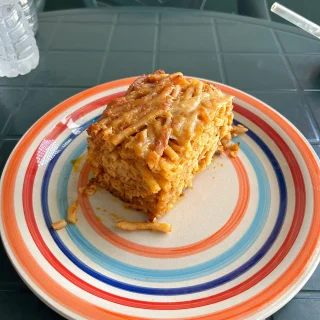
None of these traditions stayed sealed off. Curry went into Creole kitchens, Creole seasoning went into curry, and dishes like pelau and macaroni pie belong to everyone. That mixing, and the arguments over whose version is right, is at the heart of Trinbago food.
02
Doubles and street food
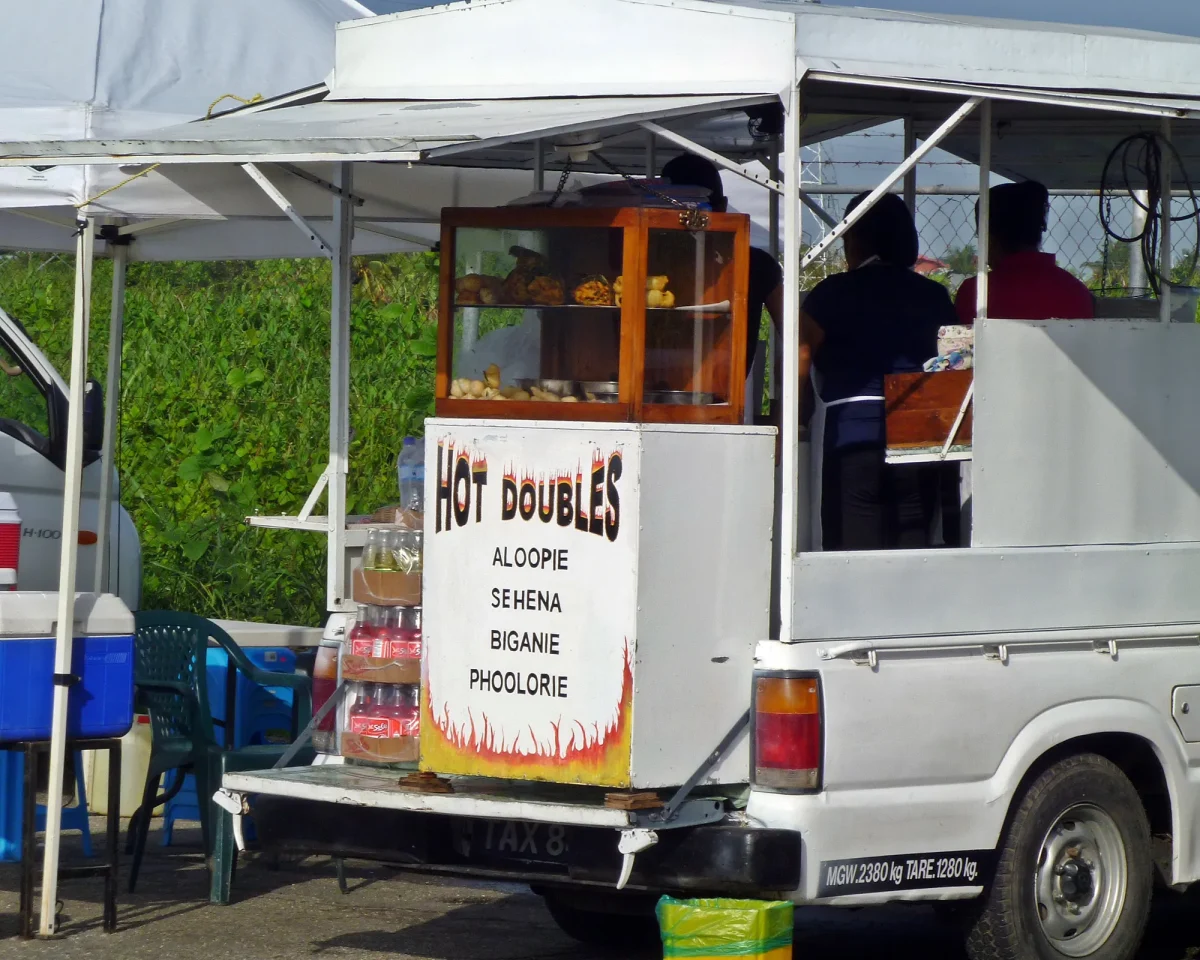
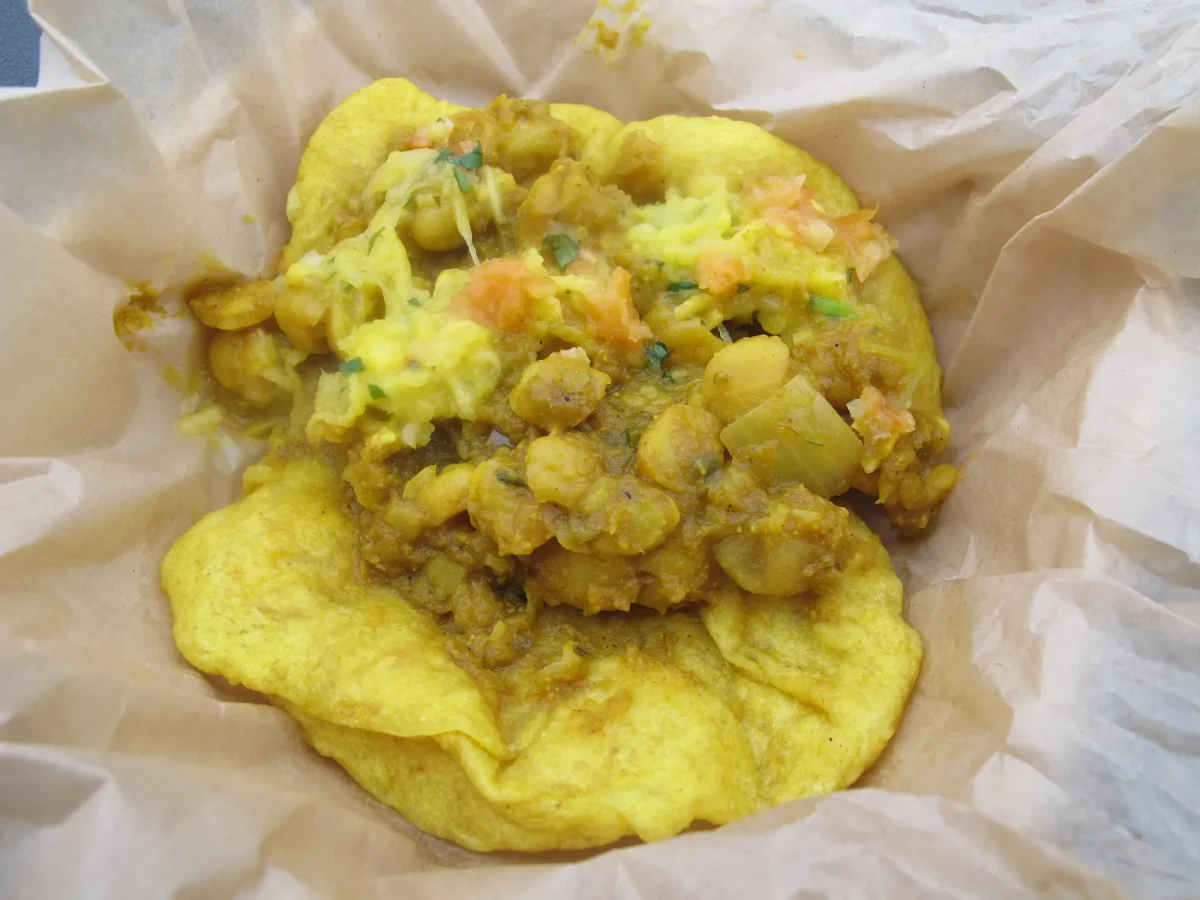
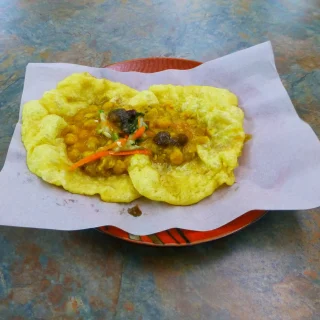
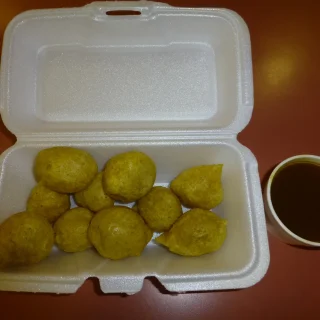
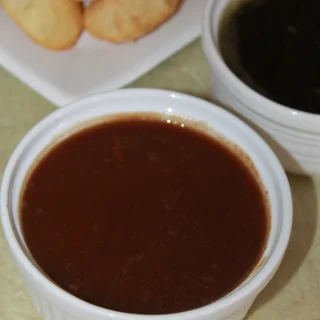
Trinidad eats a lot of its food on the street. Doubles are the best known: two soft, fried bara with curried channa, sold mostly in the morning from stalls, cars and small shops. Alongside them you will find pholourie, aloo pies, saheena and kurma, sold by the bag.
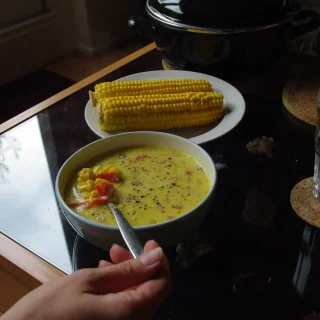
At night and after fetes the menu changes to corn soup, pies, gyros and bake and shark. Ordering is quick and personal: you say how much pepper and which sauces you want, and the vendor builds it in front of you.
Cook it
03
Roti, curry and Indian-Trinidadian influences
From 1845 to 1917, Indian indentured labourers came to Trinidad to work on sugar estates. They brought a cuisine that adapted over generations to local ingredients and tastes, and Indian-Trinidadian food is now central to everyday eating on the islands.
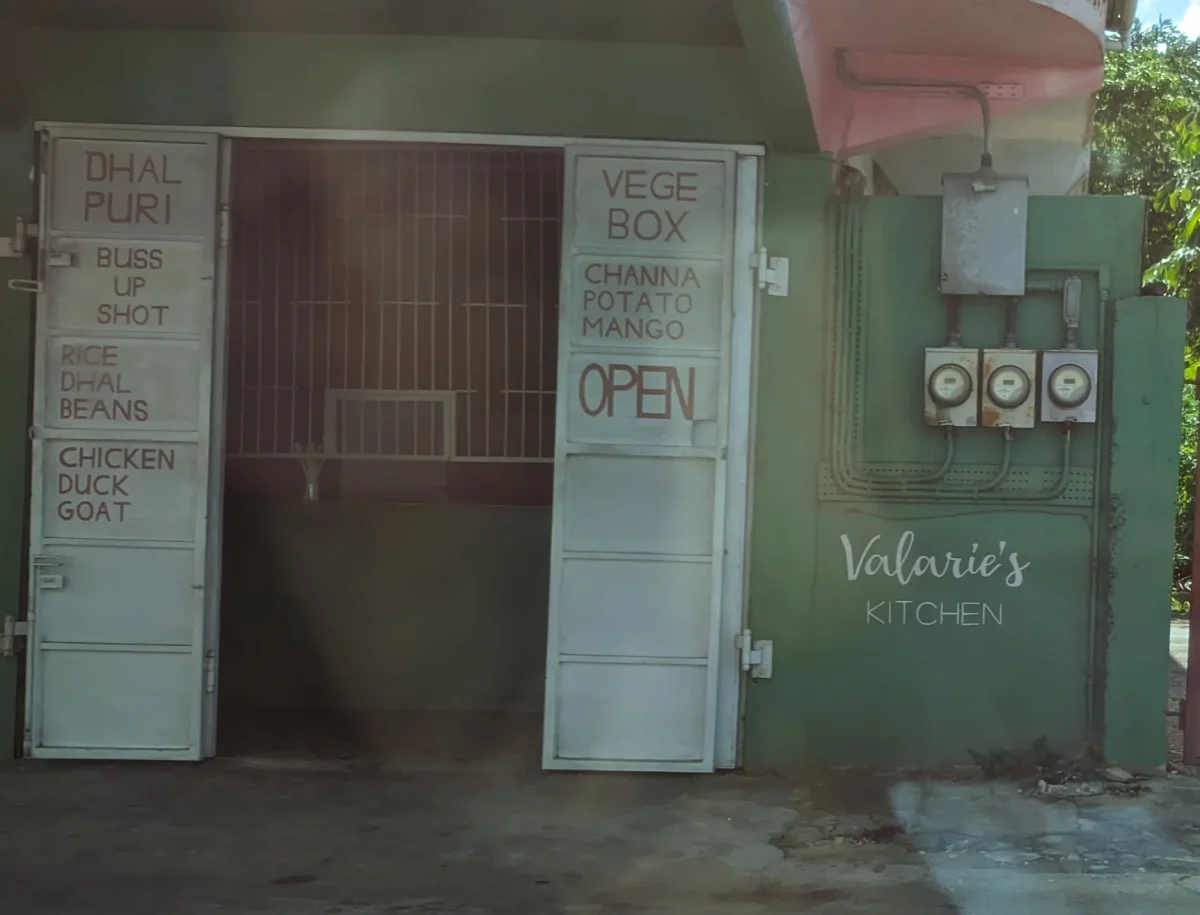
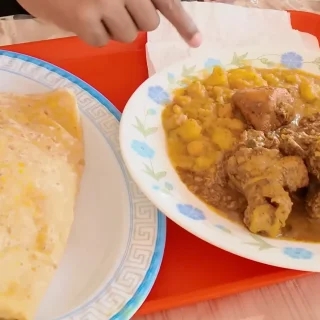
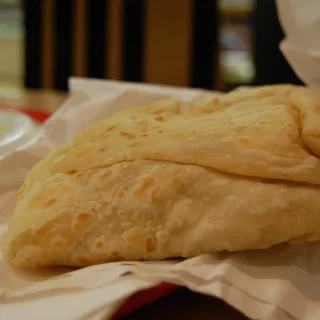
Roti shops serve dhalpuri, a roti layered with ground split peas, and paratha, better known as buss up shut, with curried chicken, goat, duck, shrimp, channa, pumpkin and more. Curry here is its own style: the powder is “burnt” in hot oil before anything else goes in, and roasted geera (cumin) gives a deep, toasty flavour.
04
Pelau, callaloo and one-pot cooking
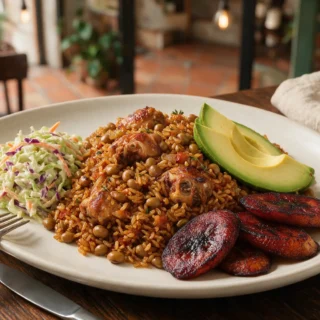
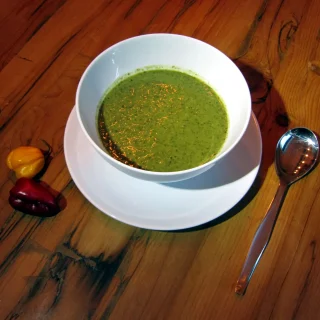
Some of the islands’ best-loved dishes come out of a single pot. Pelau starts with sugar cooked to a dark caramel, then chicken, rice, pigeon peas and coconut milk cook down together. Callaloo is dasheen leaves, okra, pumpkin and coconut milk simmered until silky, then swizzled smooth.
These are dishes for feeding a crowd, cooked for Sunday lunch, beach limes and family gatherings, and each one changes from house to house: pumpkin or no pumpkin, crab or no crab.
05
Seafood and coastal favourites
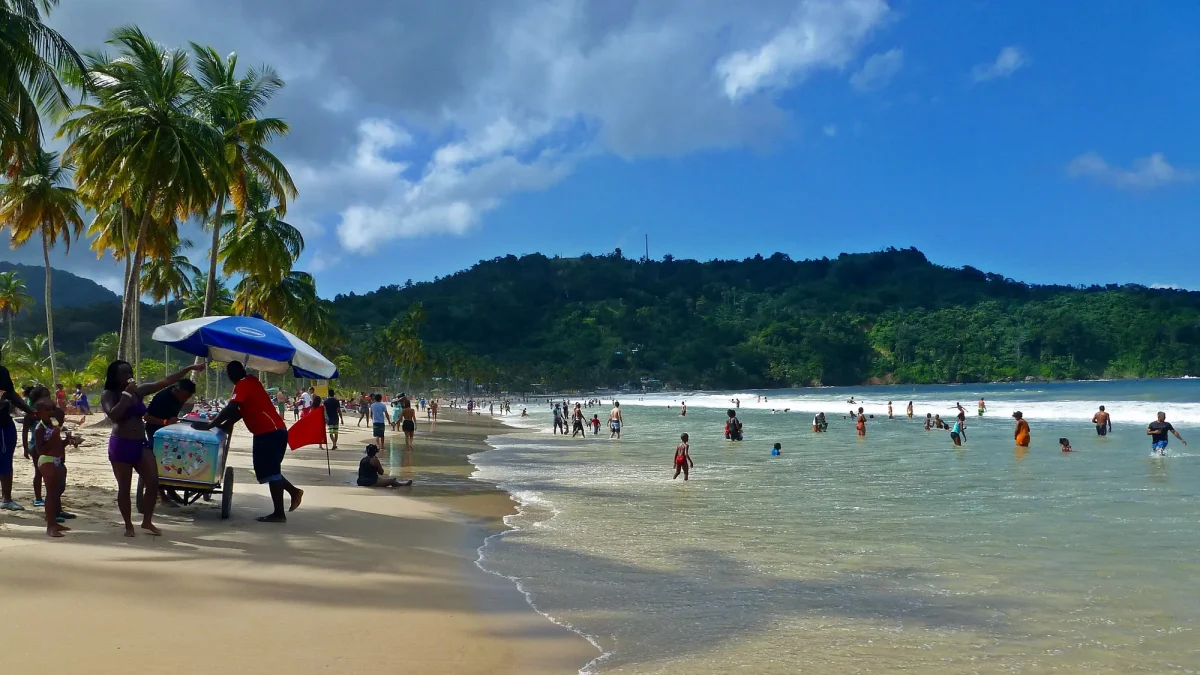
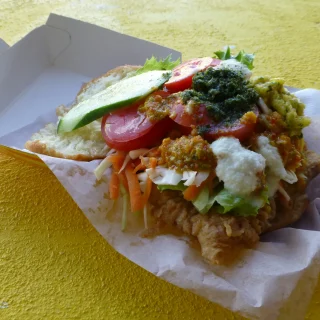
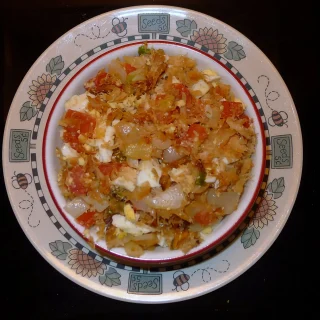
With coastline all around, fish and shellfish are everyday food. Bake and shark, a fried bake filled with seasoned fried fish and piled with toppings, is linked with the beach at Maracas Bay on Trinidad’s north coast. Saltfish, salted cod brought in for centuries, turns up at breakfast as buljol and in accra fritters.
Many shark species are under pressure from overfishing, so our recipe suggests choosing fish from well-managed sources.

06
Carnival food and festive traditions
Carnival is fuelled by street food: corn soup, doubles, pies and whatever the vendors along the route are cooking. The big religious and cultural festivals have their own tables too. Divali brings vegetarian feasts and sweets, Eid brings sawine, and Christmas brings sorrel, black cake, sweet bread, ham and pastelles.
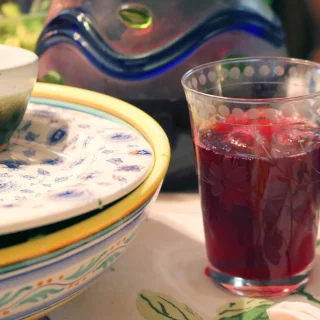
Christmas food shows how mixed the islands’ cooking is: Spanish-influenced pastelles, a British-style fruit cake made darker and boozier, and a hibiscus drink brewed with ginger and cloves.
07
Tobago food traditions
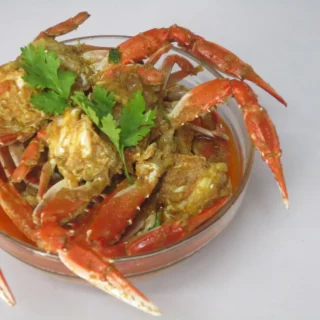
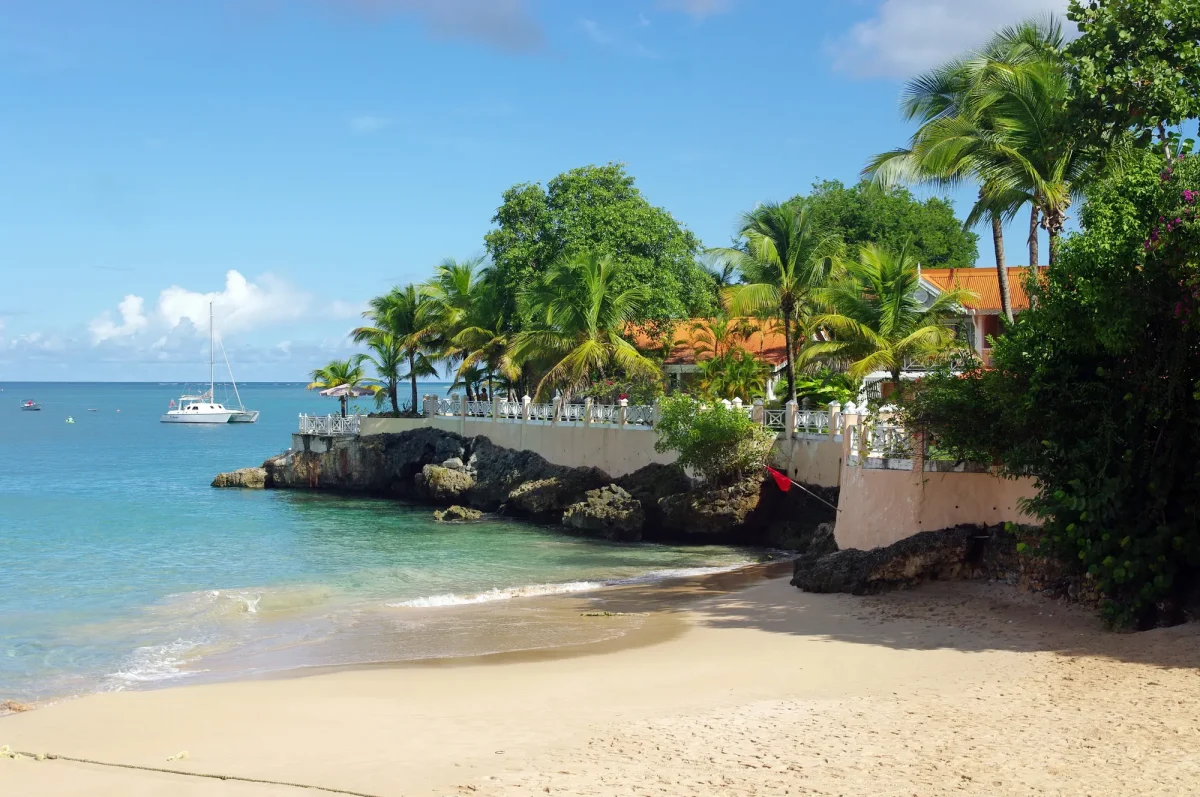
Tobago is the smaller, quieter island, and its food has its own character. Curry crab and dumplings is one of its best-known dishes, sold at beach stalls such as those around Store Bay. Provisions (root vegetables like dasheen and cassava), coconut and fresh fish are central to home cooking.
It is easy to describe “Trinidad and Tobago food” as one thing. Talk to cooks from Tobago and you will hear about their own dishes, their own festivals and their own ways with the classics.
Cook it
08
Ingredients, pepper sauces and seasonings
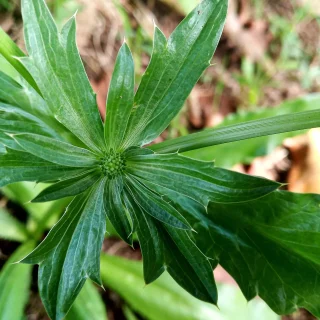
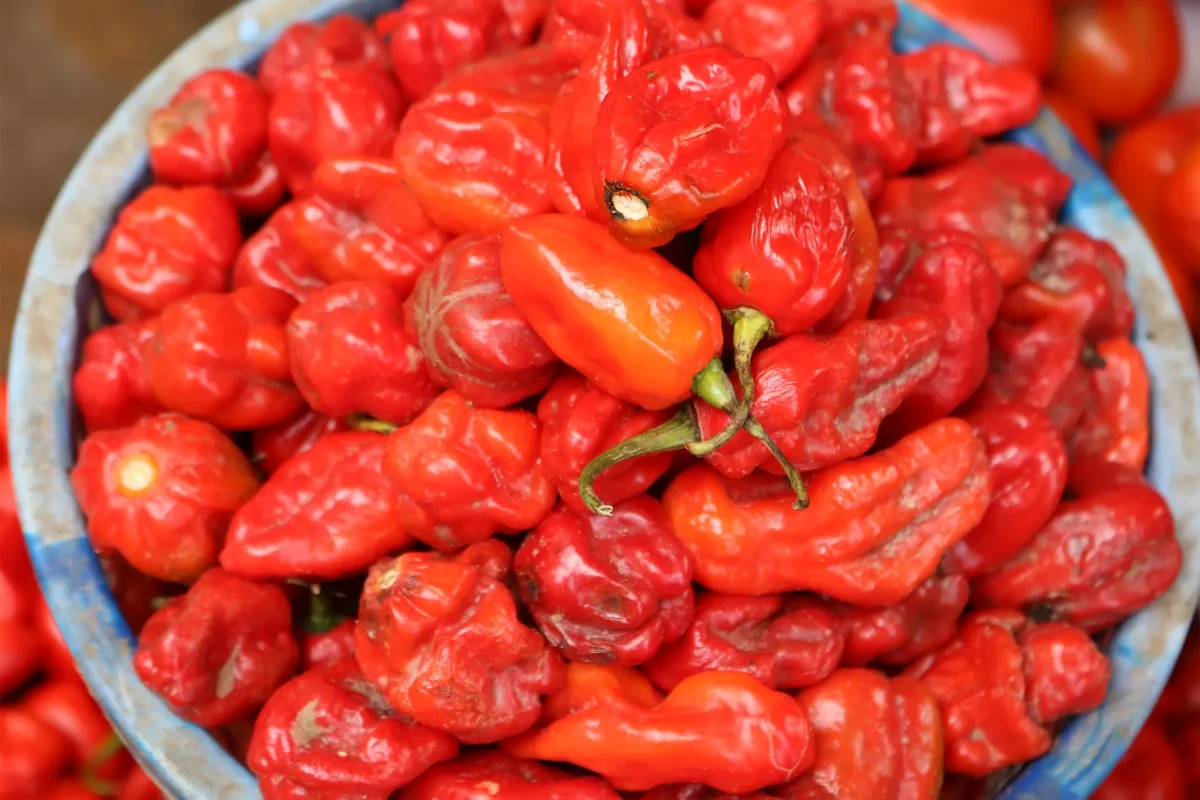
A few ingredients do a lot of the work. Green seasoning, a blend of chadon beni, chives, thyme, garlic and mild peppers, goes on almost everything before it is cooked. Trinidad-style curry powder and roasted geera carry the curries. Scotch bonnet peppers bring heat, often as a whole pepper simmered in the pot.
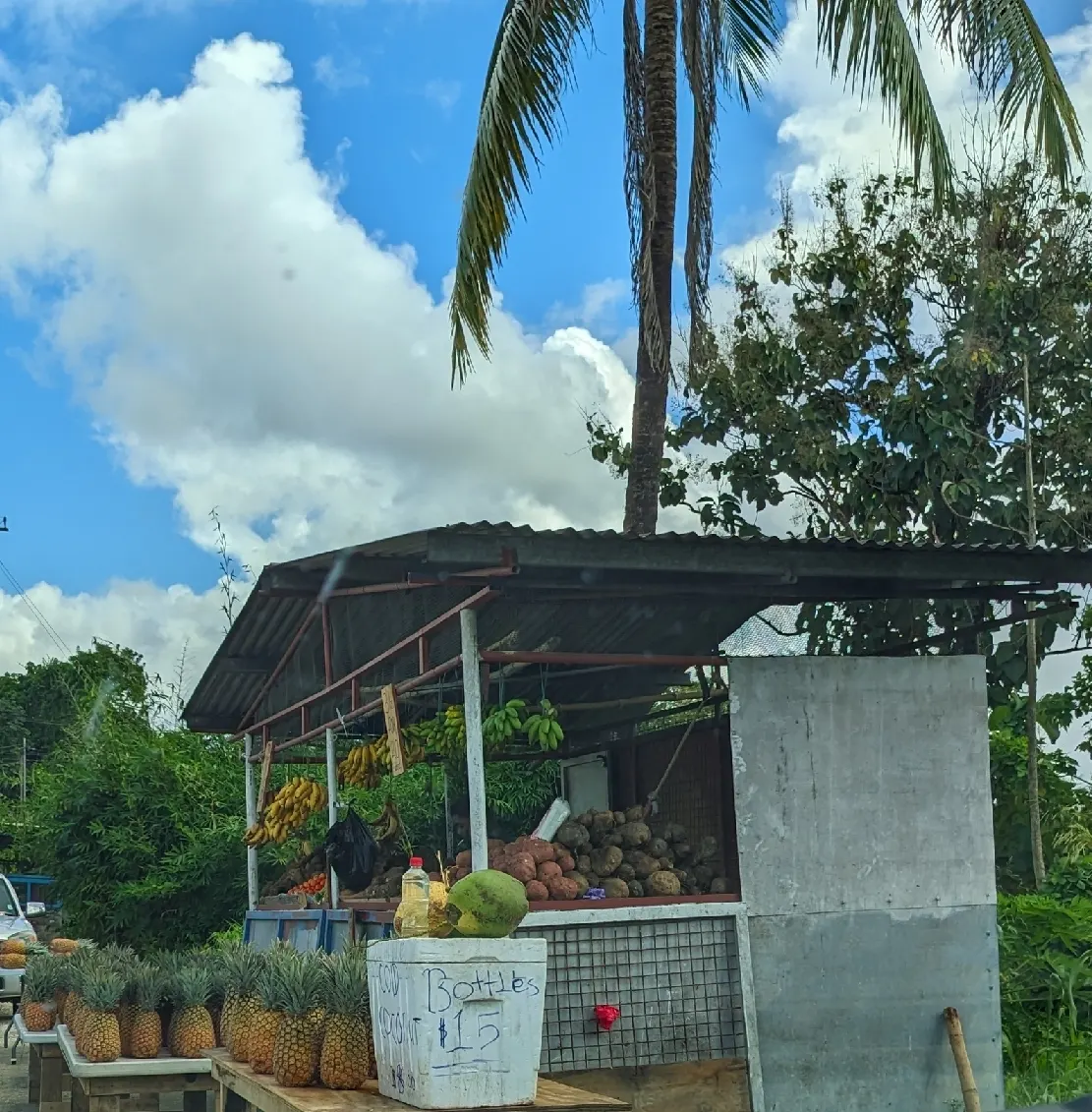
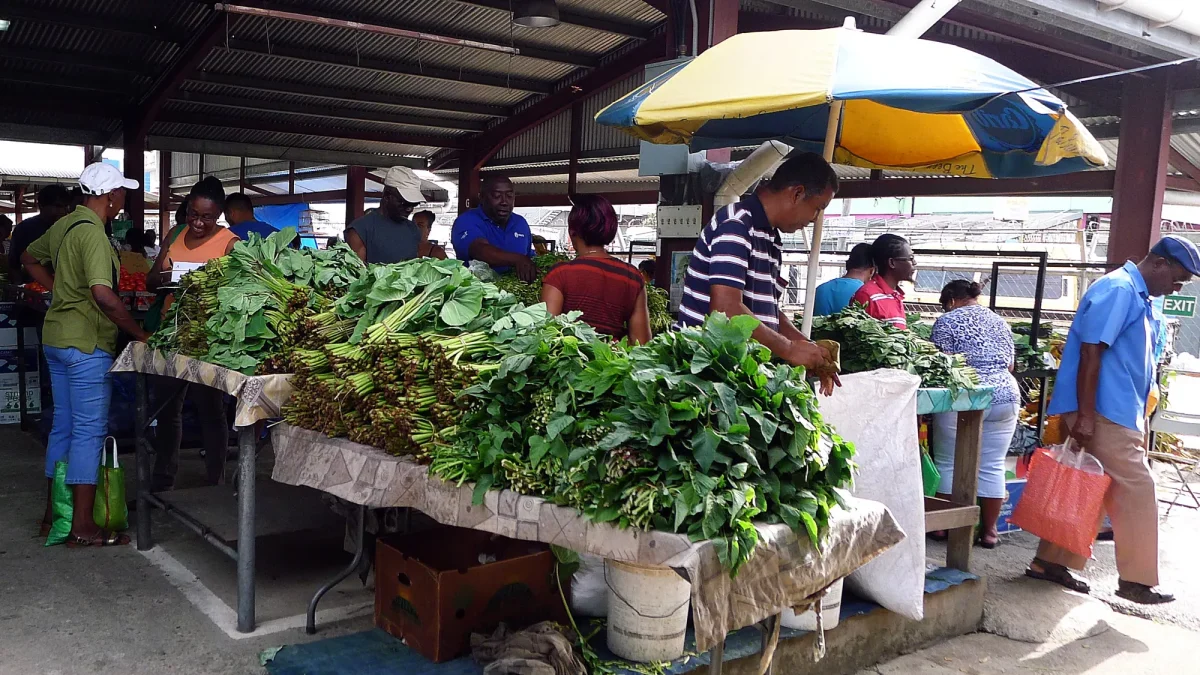
At the table there is always pepper sauce, and often tamarind sauce, mango kuchela and chutneys. Local markets fill the gaps with fresh herbs, provisions, coconuts and seasonal fruit.
Ready to cook your way through it?
Start with the essentials, or go straight to the recipe box.