Visitors to Trinidad often hear "doubles" and "roti" in the same breath, and it is easy to see why. Both come out of Indo-Trinidadian cooking, both pair bread with curry, and both are sold from small shops and stalls all over the islands. They are eaten very differently, though.
Shared roots
Between 1845 and 1917, roughly 140,000 people came to Trinidad from India as indentured labourers, according to commonly cited estimates. They brought cooking traditions that, over generations, mixed with what was available locally and with the tastes of the other communities on the islands. Doubles and roti are two of the best-known results.
Doubles: the street breakfast
Doubles are two small, soft fried breads called bara, topped with curried chickpeas (channa) and a choice of sauces. They are folded in paper and eaten by hand, often standing at the side of the road, usually in the morning.
- Bread: bara, made from a yeasted dough coloured with turmeric, fried quickly so it stays soft.
- Filling: channa, simmered until soft and saucy.
- Sauces: tamarind, cucumber chutney, mango kuchela, and pepper sauce.
- How to order: say how much pepper you want: "slight" for a little, "heavy" for a lot. Many people eat two or three.
Try our Trinidad doubles recipe and tamarind sauce.
Roti: the full meal
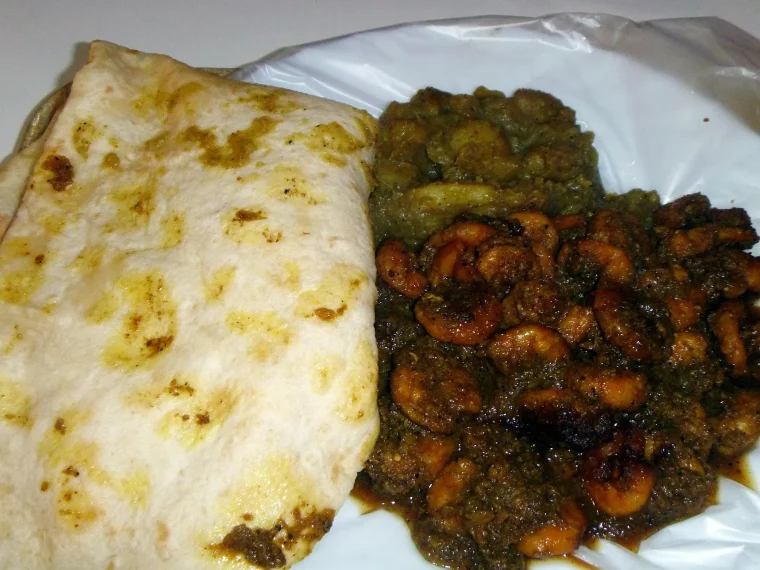
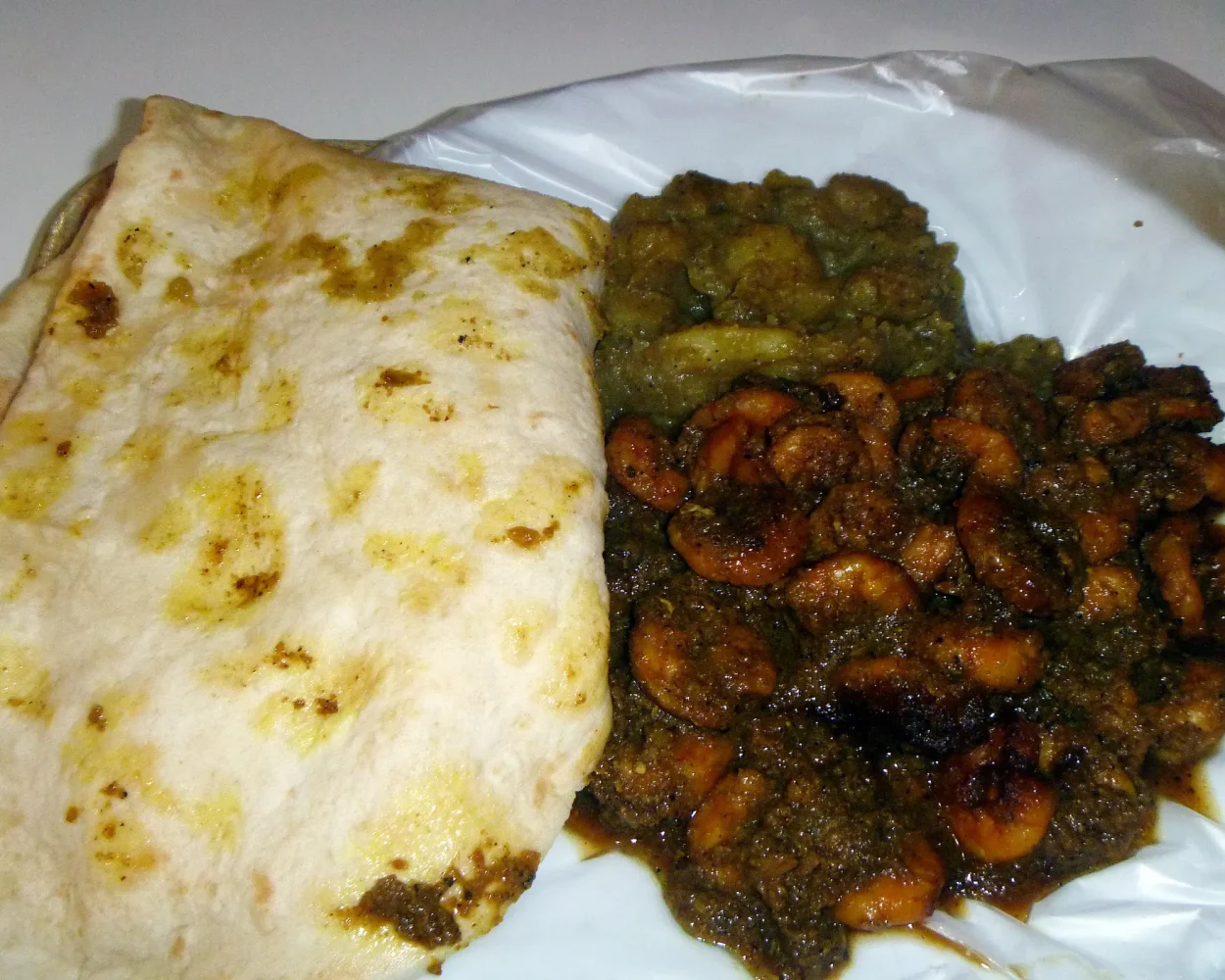
In Trinidad, "roti" can mean the bread itself or the whole meal of bread and curry. At a roti shop you choose your bread, then your curry, and it is either wrapped into a large parcel or served on the side.
- Dhalpuri: a soft roti stuffed with a thin layer of ground, seasoned split peas.
- Paratha, or buss up shut: a flaky, layered roti beaten until it tears apart. See our buss up shut recipe.
- Sada roti: a plain, simple roti usually eaten at breakfast.
- Fillings: curry chicken, curry goat, curry shrimp, curry duck, channa and aloo (chickpeas and potato), pumpkin, and more.
A wrapped roti is a substantial lunch. Buss up shut is usually served alongside the curry so you can tear pieces off and scoop.
The quick comparison
- Size: doubles are a snack; roti is a meal.
- Time of day: doubles are mostly a morning thing; roti is lunch and dinner.
- Bread: fried bara for doubles; griddle-cooked roti for roti.
- Filling: always channa for doubles; almost anything curried for roti.
Which should you make first?
If you are new to cooking either, start with the channa: it is the base of doubles and a classic roti filling too. Once you are comfortable with that, try bara, which is quicker to learn than layered paratha.