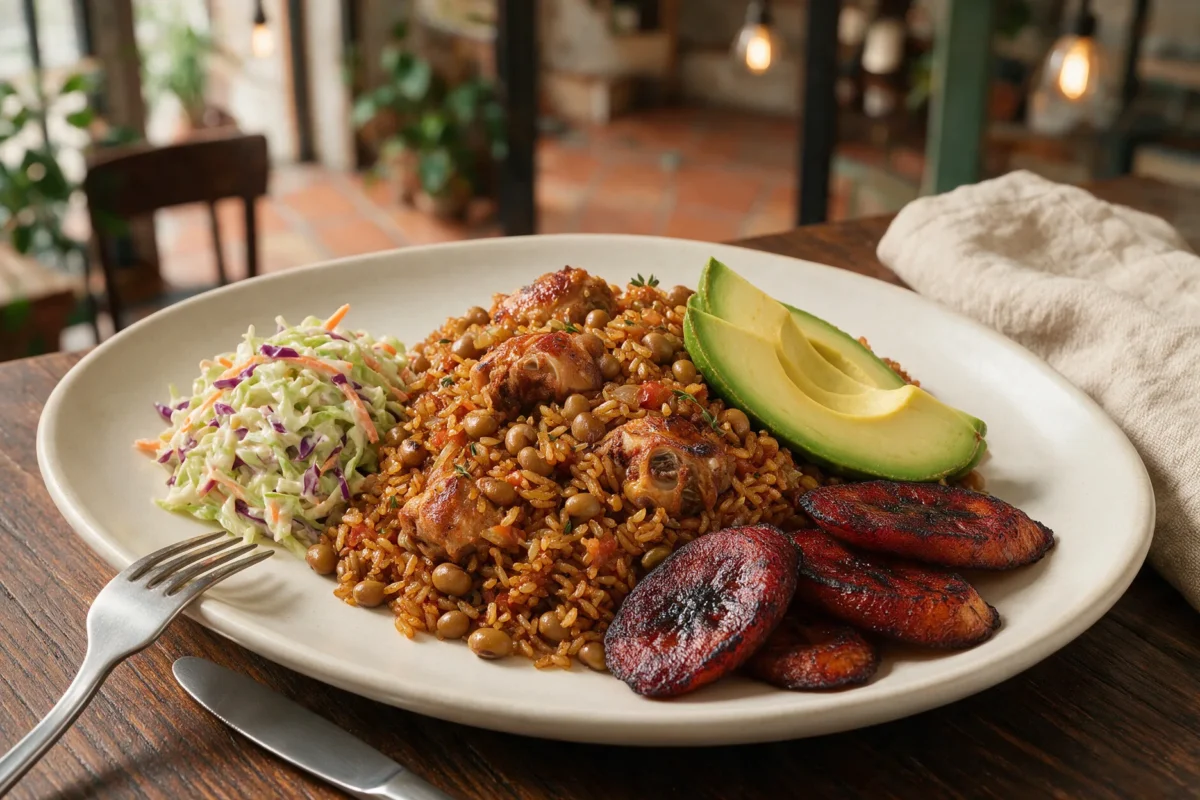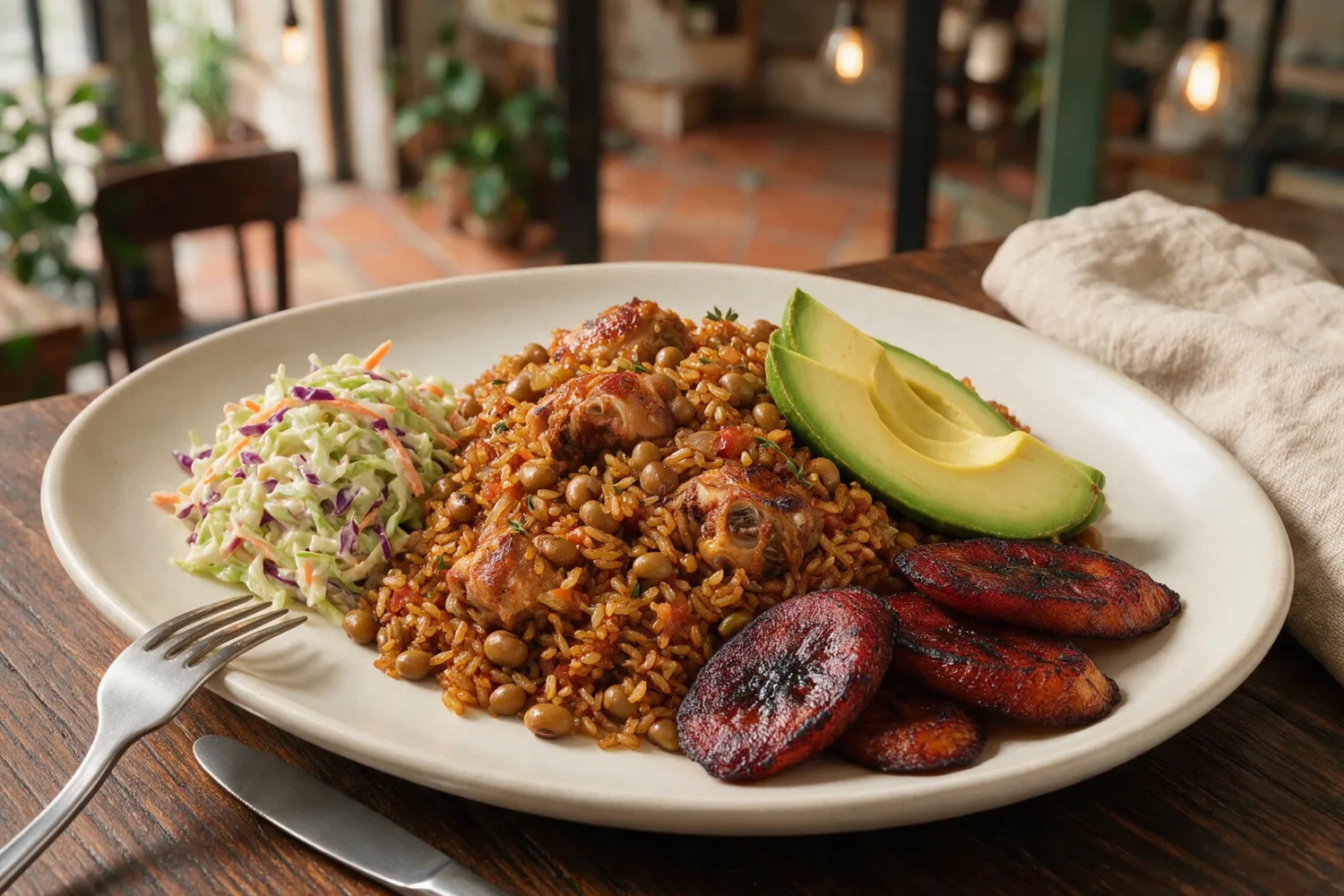
If you have eaten at a Trinidad beach lime, a family Sunday or a church harvest, you have probably had pelau. It is rice, pigeon peas and meat, usually chicken, cooked together in one heavy pot until the rice has soaked up everything around it. The colour is a deep brown, and the flavour is savoury and rich with a faint caramel edge.
Where pelau comes from
Rice dishes cooked with meat in one pot turn up all over the world, and pelau shares a family name with pilau and pilaf. In Trinidad and Tobago it took on its own character: browned sugar, coconut milk, pigeon peas and the herb-heavy green seasoning that flavours so much local cooking. The exact route the dish took to the islands is debated, and most cooks care more about the pot in front of them than the history behind it.
What goes in it
- Meat. Chicken is the most common. Beef, pork or a mix are also traditional.
- Rice. Parboiled rice holds its shape and doesn’t turn mushy.
- Pigeon peas. Fresh, frozen or canned. They are what makes pelau taste like pelau to most people.
- Coconut milk. For body and richness.
- Green seasoning. The meat is marinated in it before cooking.
- Sugar. Cooked to a dark caramel at the start. This is the step that gives pelau its colour.
- A whole hot pepper. It sits on top of the pot and flavours it without making it fiery, as long as it doesn’t burst.
The step that matters most: browning
Before anything else goes into the pot, sugar is melted in hot oil and cooked until it is very dark, close to the colour of molasses. Then the seasoned meat goes in and is stirred until every piece is coated.
Many recipes rush this step or replace it with bottled browning. Bottled browning gives you the colour but not the flavour, so we suggest learning the real thing. Watch the sugar closely: it goes from pale to perfect to burnt within a minute, and burnt sugar makes the whole pot bitter. Take it off the heat if you are unsure. You can always cook it a little more.
What pelau should taste like
Good pelau is savoury first, not sweet. The caramel should be in the background, giving depth, with the herbs, coconut and peas in front. The rice should be tender and separate, with a few crispy bits from the bottom (the bun-bun) of the pot that people fight over.
Common problems
- Mushy rice. Too much liquid or too much stirring. Once it is covered, leave it alone.
- Bitter taste. The sugar went too far. Start again; there is no fixing it.
- Pale colour. The sugar didn’t go far enough, or the chicken went in too soon.
- Burnt bottom. The heat was too high. Pelau cooks low and slow once the lid is on.
How to serve it
Pelau is a complete meal on its own, but most people serve it with coleslaw or sliced cucumber and tomato, avocado slices, fried ripe plantains and a bottle of pepper sauce on the table. Leftovers are excellent the next day.
Ready to cook? Start with our Trinidad pelau recipe.